Training Tracks Terminal Simulator Cyber Range Lab Track Diagnostic Tuition & Scholarships Mentors FAQ
[BTU LABS] Accredited Professional Cyber Academy

Master Modern
Cyber Defense & Warfare

Accelerate your cybersecurity career with Georgia's most intensive hands-on academy at Business and Technology University. Train in real-time cyber ranges, master offensive ethical hacking, automated SOC defense, and cloud security architecture.

0%
Employment Rate
0+
Lab Hours
0%
Live Cyber Drills
0wks
Avg. To Hire
BTU Cyber Security Operations Center and Threat Defense Room

BTU Cyber Range Alpha

● SIMULATING LIVE APT29 & RANSOMWARE THREATS

ACTIVE

Interactive Threat Simulator

Test drive our live training console right now. Execute defensive scans, analyze simulated live malware, and mitigate cyber threats just like students do in BTU's SOC lab.

btu-cyber-terminal v3.4 — sandbox@btu.edu.ge
=====================================================================
[+] BUSINESS & TECHNOLOGY UNIVERSITY CYBERSECURITY LAB TERMINAL
[+] SYSTEM INTEGRITY: 100% | ENVIRONMENT: SECURE SANDBOX MODE
[+] Type 'help' or click the quick commands below to begin.
=====================================================================
student@btu-lab:~$
Quick Actions:

Industry-Aligned Cyber Programs

Designed in partnership with top security vendors and international certification standards. Select a track to explore the week-by-week curriculum.

Red Team Specialization

Offensive Security & Ethical Hacking

Master the methodology of advanced penetration testers. Discover, weaponize, and report zero-day vulnerabilities in networks, active directories, web applications, and APIs before malicious threat actors can exploit them.

Duration: 24 Weeks (Part-Time)
Effort: 14 Hrs / Week
Prerequisite: Basic Networking & Linux
Weeks 1 – 6

Reconnaissance, OSINT & Network Infiltration

  • Active & Passive OSINT collection and digital footprinting
  • Custom Nmap scripting, Wireshark packet dissection & service enumeration
  • Bypassing perimeter firewalls and IDS/IPS evasions
  • Vulnerability scanning with Nessus and OpenVAS
Kali Linux Nmap Wireshark Shodan
Weeks 7 – 12

Web Application Security & OWASP Top 10

  • Exploiting SQL Injection, Blind Injections, and Second-Order queries
  • Cross-Site Scripting (XSS), CSRF, SSRF and CORS misconfigurations
  • API security testing, JWT tampering, and broken object level auth (BOLA)
  • Burp Suite Professional scripting and automated scanning
Burp Suite Pro OWASP ZAP Postman SQLMap
Weeks 13 – 18

Active Directory Attacks & Privilege Escalation

  • Windows & Linux privilege escalation vector exploitation
  • Kerberoasting, AS-REP roasting, DCSync, and Golden Ticket generation
  • Lateral movement across enterprise Active Directory forests
  • Pivoting with Chisel, Ligolo-ng, and SSH tunneling
BloodHound Mimikatz Impacket CrackMapExec
Weeks 19 – 24

CapStone Cyber War Drill & OSCP Readiness

  • 48-hour live BTU Capture The Flag (CTF) enterprise enterprise breach
  • Professional penetration test reporting and C-level vulnerability presentations
  • Exploit development basics and buffer overflow simulations
  • OSCP / CEH exam preparation and mock assessments
Metasploit GDB/Ghidra BTU Cyber Range
Blue Team & SOC Specialization

SOC Analyst & Defensive Engineering

Become a front-line defender in corporate Security Operations Centers. Monitor live network telemetry, hunt advanced persistent threats (APTs), triage security alerts with SIEM platforms, and orchestrate rapid incident responses.

Duration: 24 Weeks (Part-Time)
Effort: 12 Hrs / Week
Prerequisite: Basic IT Systems Knowledge
Weeks 1 – 6

SOC Fundamentals, Log Analysis & SIEM Architecture

  • Security Operations Center tier roles (Tier 1/2/3 workflows)
  • Splunk search processing language (SPL) and dashboard creation
  • Elastic (ELK) stack deployment and Windows Event Log auditing
  • Sysmon configuration for endpoint activity monitoring
Splunk Elasticsearch Sysmon Kibana
Weeks 7 – 12

Threat Hunting, MITRE ATT&CK & YARA Rules

  • Mapping adversary techniques to the MITRE ATT&CK Matrix
  • Authoring YARA rules for memory string and malware detection
  • Sigma rules for cross-platform SIEM detection engineering
  • Network traffic anomaly detection using Suricata & Zeek
Zeek Suricata YARA Sigma
Weeks 13 – 18

Incident Response & Digital Forensics (DFIR)

  • Triage methodologies for ransomware and unauthorized logins
  • Memory forensics with Volatility 3 and FTK Imager
  • Disk acquisition, filesystem timeline analysis, and prefetch parsing
  • Malware sandbox analysis and IOC extraction
Volatility 3 Autopsy FTK Imager Any.Run
Weeks 19 – 24

SOAR Automation & Live SOC Range Simulations

  • Automating alert response with Cortex XSOAR and Shuffle
  • Real-time defense against live Red Team simulated attacks in BTU Lab
  • Chain-of-custody documentation and incident forensic reporting
  • CompTIA CySA+ and BTL1 certification mock drills
Shuffle SOAR Wazuh BTU Blue Range
Cloud Infrastructure Security

Cloud Security & DevSecOps

Protect mission-critical cloud-native workloads across AWS, Azure, and Google Cloud. Implement automated security gates in CI/CD pipelines, container runtime auditing, and identity governance.

Duration: 20 Weeks (Part-Time)
Effort: 12 Hrs / Week
Prerequisite: Basic Cloud or Linux/Git familiarity
Weeks 1 – 5

AWS & Azure Security Architecture

  • IAM least-privilege architecture, SCPs, and RBAC matrix
  • VPC network isolation, Security Groups, and AWS GuardDuty
  • Cloud KMS, secret rotation, and S3 bucket security controls
  • CloudTrail auditing and security event stream alerting
AWS IAM Azure Entra GuardDuty Vault
Weeks 6 – 10

Container & Kubernetes (K8s) Security

  • Docker image vulnerability scanning and minimal base hardening
  • Kubernetes Pod Security Standards, NetworkPolicies, and RBAC
  • Runtime behavioral monitoring with Falco eBPF
  • Hardening control plane components against cluster takeover
Kubernetes Docker Trivy Falco
Weeks 11 – 15

DevSecOps & Infrastructure as Code (IaC)

  • Static Application Security Testing (SAST) in GitHub Actions
  • Software Bill of Materials (SBOM) and supply-chain risk mitigation
  • Scanning Terraform & OpenTofu configurations with Checkov
  • Dynamic testing (DAST) integration in release pipelines
GitHub Actions Checkov SonarQube Semgrep
Weeks 16 – 20

Cloud Breach Response & Capstone Migration

  • Simulating cloud account takeovers and metadata service abuses
  • Building an automated multi-cloud compliance dashboard
  • C-level migration report on modern cloud threat posture
  • AWS Certified Security Specialty / CCSP preparation
ScoutSuite Prowler Terraform
Executive & Governance

AI Defense, GRC & Zero Trust Architecture

Prepare for leadership and compliance roles in cybersecurity. Master international security frameworks (ISO 27001, NIS2, GDPR), enterprise Zero Trust design, and defensive engineering for AI/LLM applications.
Duration: 16 Weeks (Part-Time)
Effort: 10 Hrs / Week
Prerequisite: General Tech or Business Background
Weeks 1 – 4

Zero Trust Architecture & Identity Management

  • NIST SP 800-207 Zero Trust Architecture pillars and implementation
  • Contextual access policies, conditional access, and passwordless auth
  • Micro-segmentation strategies for enterprise networks
  • Endpoint compliance and health attestation workflows
Zero Trust Okta/Entra Zscaler
Weeks 5 – 8

Governance, Risk Assessment & Compliance (GRC)

  • ISO/IEC 27001:2022 Lead Implementer methodologies
  • EU NIS2 Directive requirements and critical infrastructure defenses
  • Risk registers, threat modeling (STRIDE), and quantitative risk (FAIR)
  • Vendor and third-party supply chain risk assessment
ISO 27001 NIS2 OneTrust
Weeks 9 – 12

Defensive AI, Prompt Injection & LLM Security

  • OWASP Top 10 for Large Language Model Applications
  • Direct & Indirect Prompt Injection mitigations and guardrails
  • Training data poisoning, model inversion, and privacy leakage defense
  • EU AI Act compliance for high-risk AI deployments
NeMo Guardrails Llama Guard OWASP LLM
Weeks 13 – 16

Cyber Crisis Leadership & Board-Level Reporting

  • Tabletop crisis management simulations (Ransomware extortion drill)
  • Executive breach disclosure under SEC / European regulations
  • Cybersecurity budget justification and ROI calculations
  • CISSP & CISM exam blueprint mastery
Tabletop Drills CISO Toolkit
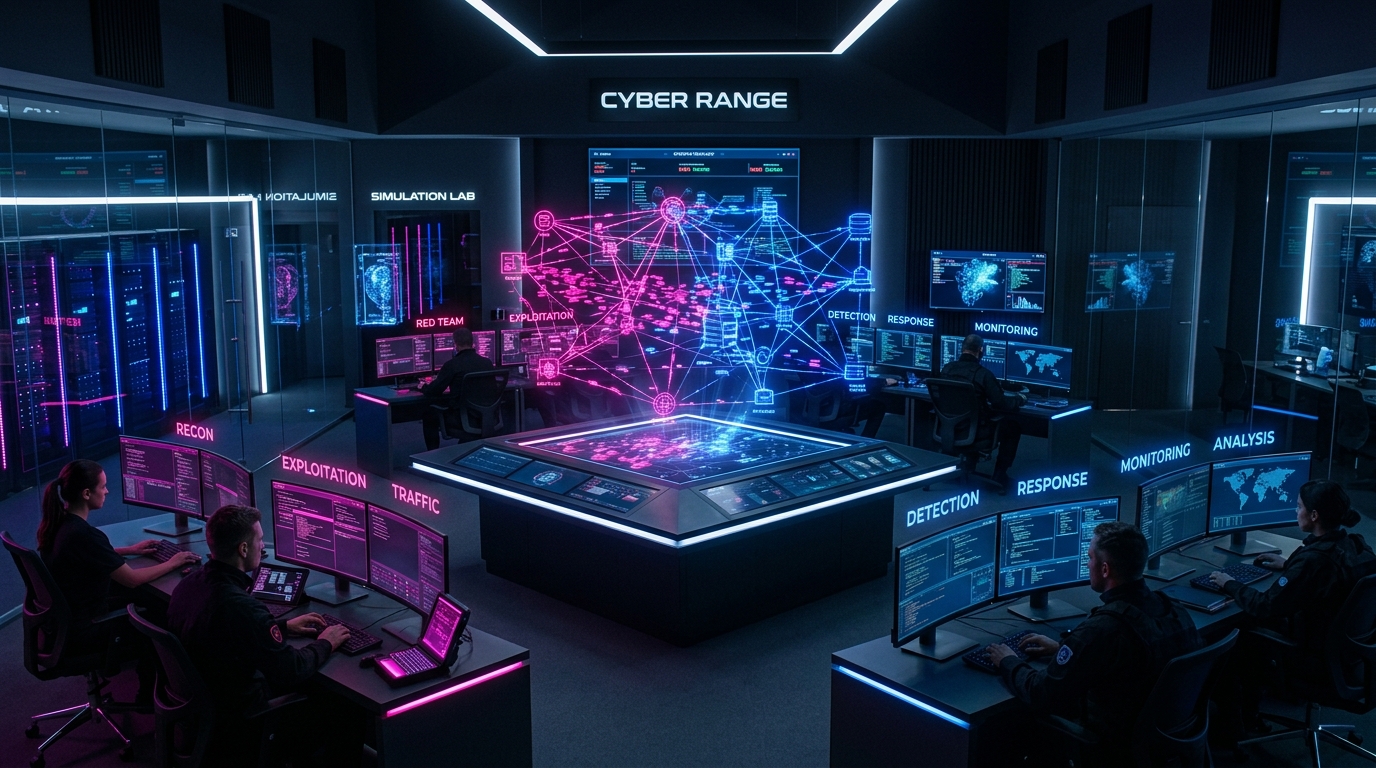
BTU Cyber Security Warfare Range Lab Simulation Room
⚡ REAL-WORLD WAR GAMES LAB

The BTU Cyber Warfare Range

Theory without battle-tested practice is obsolete. At BTU, you enter an isolated, enterprise-grade cyber range with live domain controllers, virtual ICS/SCADA systems, and automated adversary bots.

⚔️

Red vs. Blue Live Drills

Team up with cohort peers to conduct real-time offensive breaches while opposing blue squads hunt your telemetry and isolate your footholds.

🛡️

Live Ransomware Containment

Contain and reverse live simulated ransomware strains (LockBit, BlackCat) in isolated sandboxes to experience high-pressure incident mitigation.

🏆

Monthly BTU CTF Tournaments

Compete in university-wide Capture The Flag hackathons evaluated by top international cybersecurity recruiters and NATO defense experts.

Not Sure Where to Start? Take the Diagnostic

Answer 4 quick technical questions to discover which cybersecurity discipline matches your current skill set, background, and career ambition.

QUESTION 1 OF 4

What is your current technical background and experience?

Software Developer or Scripting Enthusiast

I know Python, C/C++, or web stacks and love understanding how systems break.

IT Support, SysAdmin or Network Tech

Comfortable with Windows/Linux servers, routers, logs, and troubleshooting systems.

DevOps Engineer or Cloud Practitioner

Familiar with Docker, AWS/Azure, CI/CD pipelines, or microservices architecture.

Tech Manager, Analyst or Career Switcher

Strong analytical, business, or policy background; seeking high-impact cyber roles.

QUESTION 2 OF 4

Which of these daily cyber challenges excites you most?

Infiltrating a target network and finding undetected zero-days

Playing the adversary, cracking credentials, and executing authorized attacks.

Hunting invisible malware signals and stopping attacks in progress

Forensic log analysis, building tripwires, and analyzing memory dumps.

Automating cloud guardrails so security bugs never reach production

Securing Kubernetes clusters, IaC auditing, and cloud identity management.

Leading enterprise security strategy, AI safety, and regulatory compliance

Formulating Zero Trust frameworks, mitigating AI threats, and briefing executive boards.

QUESTION 3 OF 4

What type of tools do you feel most drawn to learning?

Burp Suite Pro, Metasploit, BloodHound, Kali Linux

Penetration testing frameworks, exploit payloads, and web intercept proxies.

Splunk, Wireshark, Volatility, Zeek, Wazuh

SIEM platforms, packet sniffers, threat intelligence engines, and memory forensics.

Terraform, Checkov, Falco, Trivy, AWS GuardDuty

Container vulnerability scanners, IaC policies, and cloud monitoring tools.

Zero Trust Architectures, ISO 27001 Controls, OWASP LLM Frameworks

Security governance systems, compliance automation, and AI safety guardrails.

QUESTION 4 OF 4

What is your ultimate 2-year cybersecurity career target?

Senior Penetration Tester / Red Team Operator / Bug Bounty Hunter

Working for elite cyber consultancies or earning large global bug bounties.

Tier 2/3 SOC Analyst / Incident Response Lead / Threat Hunter

Defending enterprise banking, government, or critical infrastructure networks.

Cloud Security Architect / DevSecOps Engineer

Securing modern SaaS unicorns and multinational cloud environments.

Information Security Officer (CISO) / Cyber Risk Consultant

Leading enterprise strategy, compliance, and technological risk management.

96% RECOMMENDED MATCH

Offensive Security & Ethical Hacking

Your profile strongly aligns with Red Team operations. You enjoy investigative thinking, finding edge-case software flaws, and testing perimeter boundaries.

Average Starting Salary ₾ 65,000 – 95,000 / yr
Recommended First Cert OSCP (Offensive Security)
Open Job Vacancies 180+ Regional & Remote

Tuition & Scholarship Calculator

Quality cybersecurity education should be accessible. Check your eligibility for BTU academic grants, tech scholarships, and monthly installment options.

No Grant (0%)
Tech Olympiad (30%)
BTU Student (50%)
Women in Cyber (70%)
1 Month (Upfront) 6 Months 12 Months (0% Interest)

Estimated Investment Summary

Standard Base Tuition ₾ 4,200
Scholarship Deduction -₾ 0
Lab Range License & Vouchers Included Free
1:1 Mentor Office Hours Included Free
Total Payable:
₾ 4,200 GEL
⚡ ₾ 700.00 / month across 6 months

Learn from Active Practitioners

Our instructors don't recite slides. They are seasoned chief security officers, red team leaders, and digital forensic investigators actively defending critical infrastructures.

GK

Giorgi Kalandadze

Lead Offensive Security Instructor

Former Red Team Lead at national banking infrastructures and top European bug bounty hunter. Conducted over 150+ simulated nation-state penetration tests.

OSCP OSEP GXPN
NT

Nino Tsiklauri

SOC Operations & Threat Intelligence Lead

Senior Security Operations Director with 11+ years managing 24/7 SOC centers. Expert in threat hunting, SIEM detection engineering, and ransomware response.

CISSP GCFA Splunk Architect
DM

David Maisuradze

Cloud Defense & DevSecOps Principal

Cloud infrastructure security architect consulting for global SaaS unicorns. Specializes in Kubernetes zero trust pipelines, eBPF telemetry, and AWS cloud defenses.

AWS Sec-Specialty CKS CCSP
BTU Cyber Academy Alumni Defend Top Enterprise Networks
BANK OF GEORGIA
TBC BANK
EPAM SYSTEMS
SILKNET
CHECK POINT
FORTINET

Frequently Asked Questions

Everything you need to know about eligibility, scheduling, prerequisites, and graduation certification.

Our program is designed for ambitious learners at various stages. While having foundational computer and networking familiarity is recommended, we provide a mandatory 2-week "Cyber Fundamentals Bootcamp" ahead of track commencement covering Linux, Bash, and TCP/IP basics.

You only need a modern laptop (Windows, macOS, or Linux) with at least 8GB RAM (16GB recommended) and stable broadband internet. All virtual machine targets, penetration test environments, and SIEM servers run on BTU's dedicated high-performance cloud range.

The program follows a high-flex hybrid model. Evening lectures and threat simulations are streamed in real time with recordings provided. Students in Tbilisi can access the state-of-the-art BTU Cyber Warfare Lab 7 days a week for in-person collaborative drills.

From Week 12 onwards, every student receives 1:1 portfolio reviews, resume audits, mock technical interviews, and direct referrals to hiring partners in banking, telecoms, and international defense contractors.

Graduates receive the officially recognized BTU Professional Cyber Defense Specialist Certificate, accompanied by an authenticated digital transcript highlighting verified lab hours and capstone defense scores.